Mastering the Art of Fly Fishing for Trout in Mountain Streams
Unlock the secrets to successful fly fishing for trout in pristine mountain streams. Learn about essential gear, casting techniques, and reading the water.
Mastering the Art of Fly Fishing for Trout in Mountain Streams
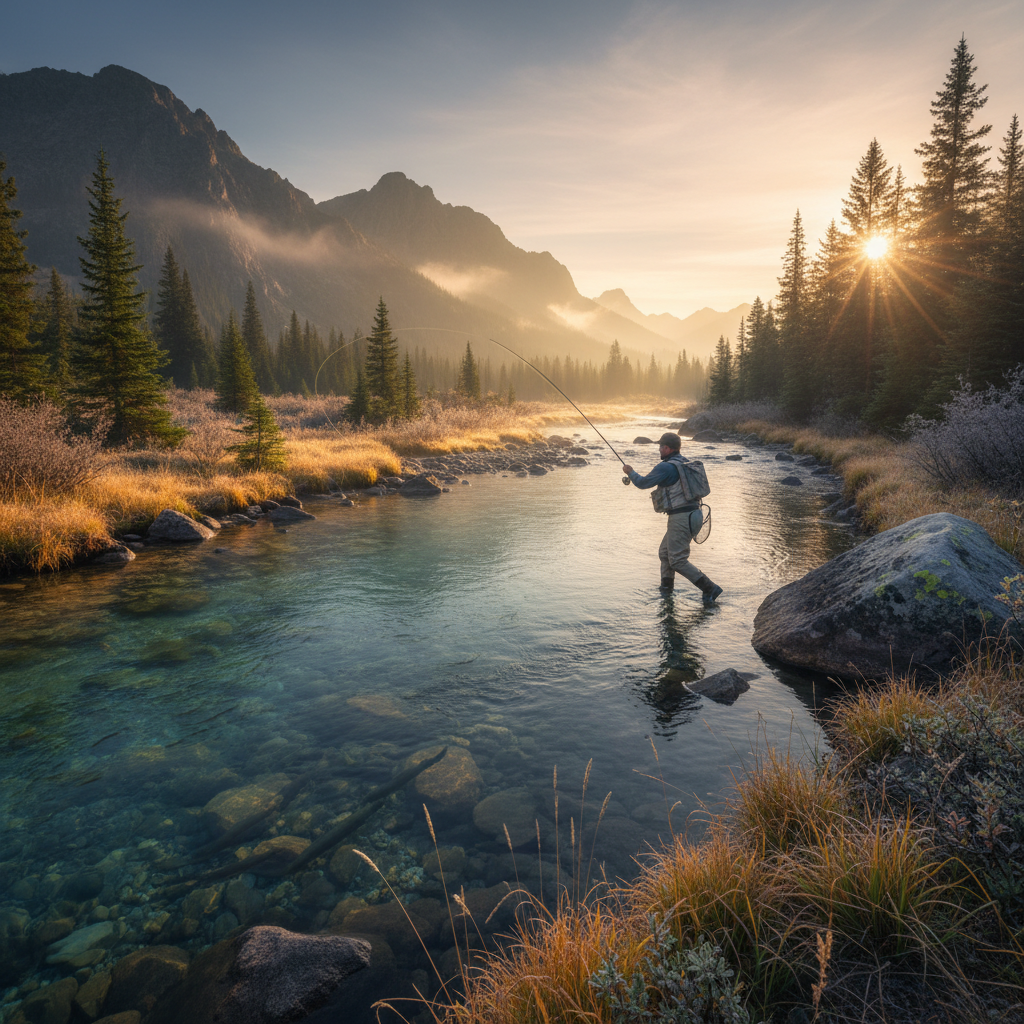
There's something uniquely serene and challenging about fly fishing for trout in the crystal-clear waters of a mountain stream. It's an experience that connects you deeply with nature, testing your patience, skill, and understanding of the aquatic world. If you're looking to elevate your angling game and experience the thrill of a wild trout on the line, this guide is for you.
Why Mountain Streams?
Mountain streams offer a pristine environment for trout, often harboring wild, native species like Brook, Brown, and Rainbow trout. Their cold, oxygen-rich waters and diverse insect life create an ideal habitat. The challenge lies in their often fast-moving currents, numerous obstacles, and the need for precise presentations.
Essential Gear for the Stream
Before you even think about casting, having the right equipment is paramount. Unlike lake fishing, stream fishing requires a more specialized setup.
Rod and Reel Selection
For most mountain stream applications, a lightweight fly rod is ideal. A 7.5 to 9-foot rod in a 3 to 5-weight range is typically perfect. This allows for delicate presentations and enough backbone to handle feisty trout. Pair it with a matching fly reel that has a smooth drag system. While the reel isn't used as much for fighting fish as it is for line storage in stream fishing, a reliable drag is still important for larger catches.
Fly Line, Leader, and Tippet
- Fly Line: A weight-forward (WF) floating line is generally preferred for its ease of casting and ability to stay on the surface.
- Leader: A tapered leader, typically 7.5 to 9 feet long, helps transfer casting energy smoothly and allows your fly to land delicately. Start with a 4X or 5X leader.
- Tippet: This is the thinnest section of your line, connected to the leader and then to your fly. Carrying spools of 4X, 5X, and 6X tippet is wise. Thinner tippet (higher X-number) is less visible to fish but also weaker.
Consider investing in a good quality fly fishing starter kit that often bundles a rod, reel, line, and case, making it easier to get started.
Waders and Boots
Staying dry and comfortable is crucial. Breathable chest waders are a game-changer, allowing you to move freely in the water without getting soaked. Pair them with sturdy wading boots that offer good ankle support and grip on slippery rocks. Felt soles or rubber soles with studs are popular choices.
Reading the Water: Where Trout Hide
Trout are masters of efficiency, positioning themselves in spots where food is abundant and they expend minimal energy. Learning to read the water is arguably the most important skill.
- Pools: Deeper, slower-moving sections often hold larger fish. Look for feeding lanes where currents bring food.
- Riffles & Runs: Fast-moving, shallow sections with broken water. These are prime feeding grounds, especially during insect hatches.
- Eddies & Seams: Areas where fast and slow currents meet. Trout often sit in the slower water, waiting for food to drift by in the faster current.
- Structure: Submerged rocks, logs, undercut banks, and overhanging vegetation all provide cover and ambush points for trout.
Casting Techniques for the Stream
Accuracy and stealth are key. Overheads casts are fundamental, but you'll need to adapt to tight spaces.
- Roll Cast: Essential for when you have limited back-casting room (e.g., dense foliage behind you). It's a simple, effective way to get your line out.
- Reach Cast: Allows you to mend your line in the air, creating a longer drag-free drift. This is crucial for presenting your fly naturally to fish.
- Mending: The act of repositioning your fly line on the water to counteract the effects of conflicting currents (drag) and achieve a natural drift. Practice upstream and downstream mends.
Fly Selection: Matching the Hatch (or Close Enough!)
Choosing the right fly can feel overwhelming, but a few patterns will cover most situations.
- Dry Flies: Mimic adult insects on the surface. Popular choices include Elk Hair Caddis, Adams, Parachute Adams, and Stimulator. Focus on size and general profile rather than exact species.
- Nymphs: Represent immature aquatic insects living on the stream bed. Pheasant Tail Nymph, Hare's Ear Nymph, and Prince Nymph are reliable producers.
- Streamers: Imitate baitfish or larger aquatic insects. Woolly Buggers in olive or black are incredibly versatile.
Always carry a good variety in different sizes. A quality fly assortment kit can save you a lot of guesswork.
The Art of Presentation and Drift
Ultimately, it's about presenting your fly naturally. Trout are highly sensitive to unnatural drifts (drag).
1. Approach Stealthily: Trout are easily spooked. Walk softly, stay low, and approach from downstream if possible.
2. Cast Upstream and Across: Aim to cast your fly a few feet upstream of where you expect the fish to be.
3. Achieve a Drag-Free Drift: This means your fly is moving at the same speed as the natural current, without the fly line pulling it unnaturally. Use mending techniques to achieve this.
4. Watch Your Indicator: If nymphing, a strike indicator will signal subtle takes. For dry flies, watch the fly itself carefully.
Catch and Release Practices
Many mountain streams operate under catch-and-release regulations to protect wild populations. Handle fish gently with wet hands, minimize their time out of water, and use barbless hooks. Revive them facing upstream in the current until they can swim away strongly.
Fly fishing in mountain streams is a journey of continuous learning. Each outing presents new challenges and rewards. With patience, practice, and respect for the environment, you'll soon be enjoying the unparalleled thrill of a mountain trout on the line.