
Mastering Drop Shot Fishing for Finicky Bass
Unlock the secrets of drop shot fishing to catch more bass, especially when they're playing hard to get. Learn rigging, bait choices, and presentation.
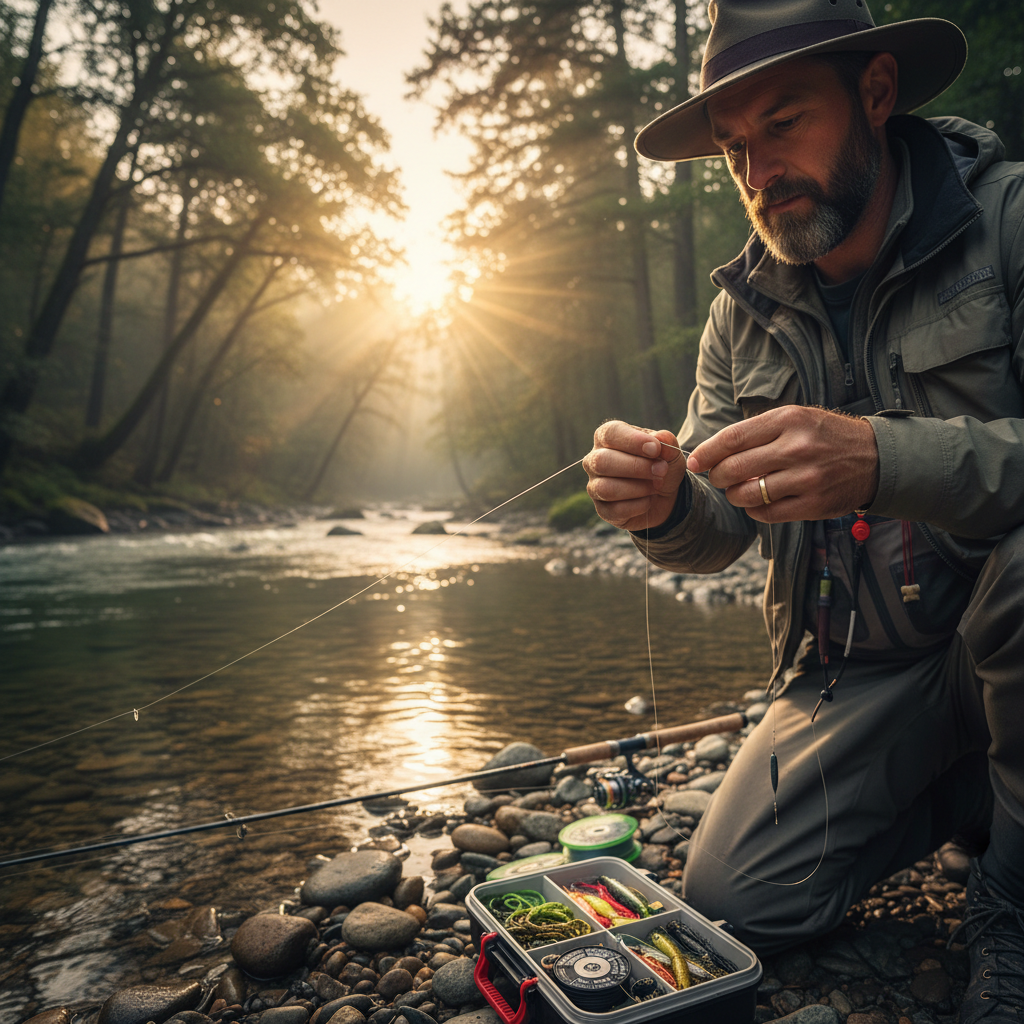
<h1>Mastering Drop Shot Fishing for Finicky Bass</h1>
<p>There are days on the water when the bass seem to have lockjaw. You’ve tried every retrieve, every topwater, every crankbait in your tackle box, but nothing seems to entice a strike. This is precisely when the drop shot rig shines. A finesse technique originally popularized for highly pressured bass on the clear waters of Western reservoirs, drop shot fishing has now become a staple for anglers across the globe, proving incredibly effective for both largemouth and smallmouth bass, as well as a variety of other species.</p>
<p>The beauty of the drop shot lies in its subtle presentation and its ability to keep your bait suspended precisely in the strike zone, off the bottom, regardless of your retrieve speed or the terrain below. This makes it an invaluable tool for targeting fish holding on structure, near ledges, or suspended in the water column.</p>
<h2>Understanding the Drop Shot Rig</h2>
<p>At its core, a drop shot rig is surprisingly simple. It consists of a hook tied directly to the main line, with a weight attached to the tag end of the line, below the hook. This setup allows your soft plastic bait to hover naturally, twitching enticingly with the slightest rod movement or current.</p>
<h3>Key Components:</h3>
<ul>
<li><b>Hook:</b> Typically a specialized drop shot hook, offset worm hook, or octopus hook in sizes #2 to 1/0, depending on your bait size.</li>
<li><b>Line:</b> Fluorocarbon line in 6-10 lb test is preferred for its low visibility and sensitivity. Some anglers use a braid-to-fluorocarbon leader setup.</li>
<li><b>Weight:</b> Cylindrical or tear-drop shaped drop shot weights in sizes from 1/8 oz to 1/2 oz, chosen based on depth, current, and desired fall rate. These often feature a pinch swivel for easy depth adjustment.</li>
<li><b>Bait:</b> Small soft plastics like worms, minnow imitations, or creature baits are popular choices.</li>
</ul>
<h2>Setting Up Your Drop Shot Rig</h2>
<p>Tying a drop shot correctly is crucial for its effectiveness. Here’s a step-by-step guide:</p>
<ol>
<li>Take your mainline (or fluorocarbon leader if using braid) and thread it through the eye of your chosen hook.</li>
<li>Tie a Palomar knot, but here’s the trick: after passing the line back through the eye to form the loop, take the tag end and pass it back through the hook eye again, from the top down. This makes the hook stand out horizontally, improving hook sets.</li>
<li>Determine how far off the bottom you want your bait to suspend. This dictates the length of the tag end.</li>
<li>Attach your drop shot weight to the tag end. Many drop shot weights have a swivel clip that allows for quick adjustments or changes.</li>
</ol>
<p>For more advanced anglers looking for reliable knot-tying tools, consider checking out our premium knot-tying tool. It can make this process even easier!</p>
<h2>Bait Selection for Drop Shot Fishing</h2>
<p>The beauty of the drop shot is its versatility with baits. Here are some top picks:</p>
<ul>
<li><b>Straight Tail Worms:</b> The classic choice. Small, thin worms (3-5 inches) that quiver with minimal movement.</li>
<li><b>Minnow/Finesse Baits:</b> Perfect for imitating baitfish. Often rigged nose-hooked for maximum action.</li>
<li><b>Creature Baits:</b> When bass are looking for something a bit bulkier, small creature baits can mimic crawfish or other aquatic organisms.</li>
</ul>
<h2>Presentation and Retrieval Techniques</h2>
<p>The key to drop shot success is a subtle, natural presentation. Cast your rig to your target area and let it sink to the bottom. Once the weight hits, reel in any slack until your line is taut, feeling the bottom with the weight.</p>
<h3>Retrieve Styles:</h3>
<ul>
<li><b>Dead Sticking:</b> The simplest and often most effective. Let the bait sit perfectly still, occasionally twitching the rod tip minimally.</li>
<li><b>Subtle Drag:</b> Slowly drag the weight along the bottom, allowing your bait to hover and dance above any structure.</li>
<li><b>Shake and Pause:</b> Lightly shake the rod tip to impart a subtle quiver to your bait, then pause. This can often trigger hesitant bites.</li>
</ul>
<p>Focus on areas where bass are likely to hold: deep points, submerged humps, rock piles, ledges, and areas with standing timber or brush. The drop shot allows you to precisely target these spots without getting hung up as easily as with traditional bottom-bouncing rigs.</p>
<p>Understanding the water you’re fishing and the behavior of the bass will help you refine your depth and retrieve. Pay close attention to your line for any subtle taps or unnatural movements – these are often a bite!</p>
<h2>Gear Considerations</h2>
<p>A good medium-light to medium power spinning rod (6'6" to 7'2") with a fast action tip is ideal for drop shotting. This setup provides the sensitivity needed to detect subtle bites and the backbone to handle fighting fish. Pair it with a 2000-3000 series spinning reel. For those longer days on the water, having a reliable waterproof tackle box to keep your specialized drop shot weights and hooks organized is essential.</p>
<p>The drop shot is a phenomenal technique for tough fishing conditions. It may not be the flashiest way to catch bass, but its effectiveness speaks for itself. Practice your knots, experiment with baits, and master the subtle presentations, and you’ll find yourself landing more fish, even on the toughest days.</p>