Choosing the Right Lure for Trout Fishing
Discover the best lures for trout fishing in rivers and lakes. Learn when to use spinners, spoons, jigs, and flies for maximum success.
Hooking Up: Your Guide to Choosing the Best Trout Lures
Trout are among the most sought-after freshwater game fish, prized for their beauty, fighting spirit, and delicious taste. But these wary fish can also be challenging to catch. The key to consistent success often lies in selecting the right lure for the conditions, whether you're casting in a clear mountain stream or trolling a vast alpine lake.
The Allure of Spinners
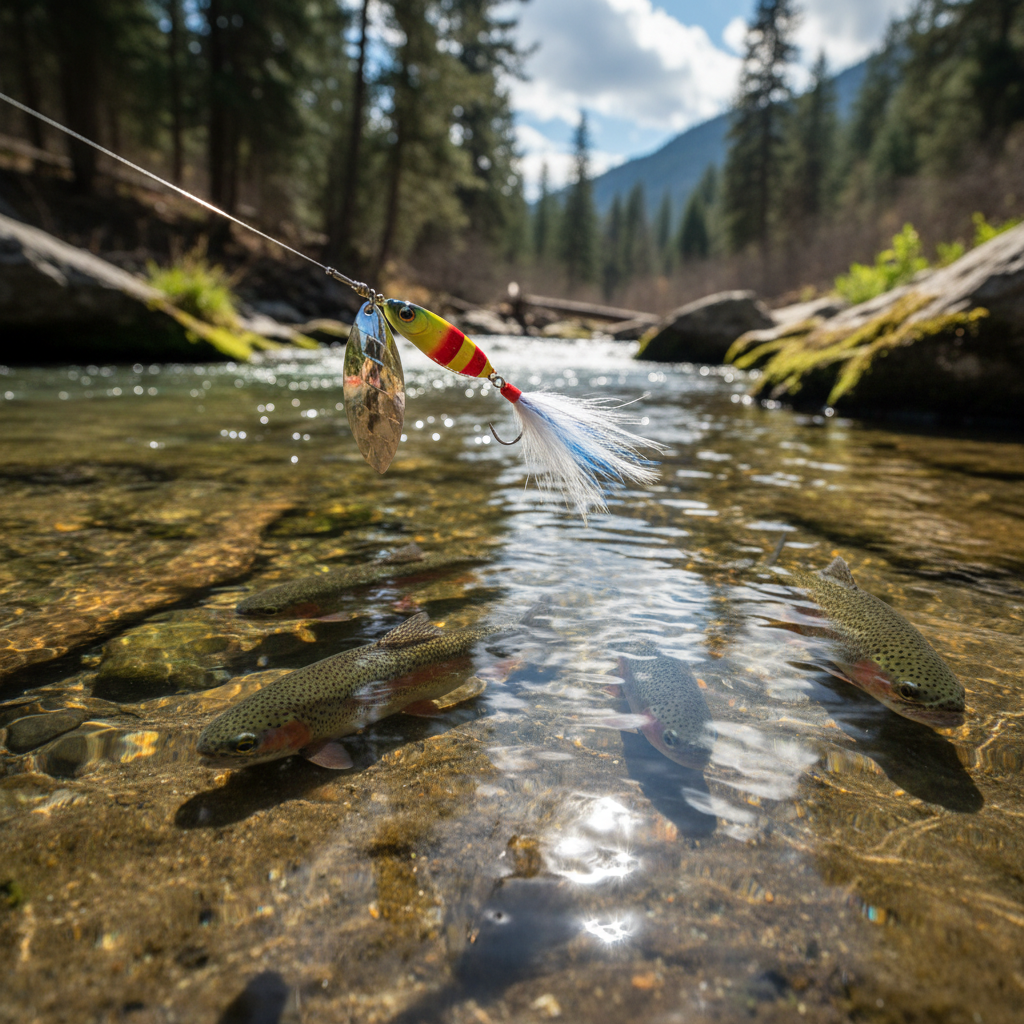
When it comes to versatility and effectiveness, spinners are hard to beat for trout. Their flashing blades and vibrating action mimic small baitfish, attracting trout from a distance. They are particularly effective in rivers and streams, but also work well in still waters.
- Blade Shape: Colorado blades offer maximum vibration and lift, ideal for slow retrieves or deep water. Indiana blades are more teardrop-shaped and offer a good balance of flash and vibration. Willow leaf blades are slender, producing less vibration but more flash, best for faster retrieves or larger, clearer bodies of water.
- Color: Natural colors like silver, gold, and black are excellent for clear water. Bright colors like chartreuse, orange, or fire tiger can be more effective in murky water or on overcast days.
- Size: Generally, smaller spinners (1/16 oz to 1/8 oz) are best for stream trout, while larger sizes (1/4 oz to 3/8 oz) can be used for larger trout in lakes.
Our Premium 16-Piece Spinner Lure Kit offers a fantastic selection to get you started, covering a range of colors and sizes perfect for various trout species and conditions.
Spoonful of Success: When to Throw a Spoon
Spoons are another classic trout lure, known for their wobbling, erratic action that imitates injured baitfish. They are remarkably effective in lakes and larger rivers, especially when trout are feeding on minnows or other forage fish.
- Casting Spoons: These are heavier and designed for long casts. Their broad profile allows for a seductive flutter on the fall.
- Trolling Spoons: Lighter and often elongated, these spoons achieve their action when pulled behind a boat. Different spoons have different actions – some dart wildly, while others have a subtle wobble.
- Colors & Patterns: Silver, gold, copper, and blue/silver are timeless choices. Patterns mimicking rainbow trout, perch, or shiners can also be deadly.
Jigs for Jitters: A Finesse Approach
While often associated with bass, jigs can be incredibly effective for trout, particularly when they are finicky or holding tight to structure. Small marabou jigs, tube jigs, or even tiny hair jigs can entice strikes.
- Presentation: Jigs are typically fished with a lift-and-fall retrieve, mimicking an injured baitfish or insect. They can also be suspended under a bobber.
- Color: White, black, olive, and brown are reliable choices. Experiment with bright attractant colors like pink or chartreuse in stained water.
Consider pairing your jigging efforts with the Premium Bionic Minnow Fishing Lure for an ultra-realistic baitfish presentation that trout often can't resist, especially in clear water where visual appeal is key.
The Art of Fly Fishing
For many, fly fishing is the pinnacle of trout angling. Matching the hatch – presenting a fly that mimics the insects trout are currently feeding on – is crucial. Flies are categorized into:
- Dry Flies: Float on the surface, imitating adult insects.
- Nymphs: Subsurface imitations of aquatic insect larvae.
- Streamers: Larger flies that mimic minnows or leeches.
Fly fishing requires specialized gear and technique, but the rewards of fooling a trout on a perfectly presented fly are immense.
Factors Influencing Lure Choice
- Water Clarity: Clear water often calls for more natural colors and smaller lures. Murky water allows for brighter colors and louder presentations.
- Water Temperature: Colder water typically means slower retrieves and smaller baits. Warmer water can tolerate more aggressive presentations.
- Time of Day/Weather: Overcast days might favor brighter colors, while sunny days might call for more muted or flashy options. Low light conditions can make spinners or spoons with strong vibration more effective.
- Trout Species: Lake trout might prefer larger spoons or jigs, while brook trout in small streams prefer tiny spinners or traditional wet flies.
Final Thoughts: Experimentation is Key
Ultimately, there's no single "best" trout lure. The most successful anglers are those who experiment, paying close attention to what the fish are telling them. Start with these guidelines, observe the conditions, and don't be afraid to try something new. The thrill of figuring out the puzzle and landing a beautiful trout is what keeps us coming back for more!