Beginner's Guide to Fly Fishing for Trout
New to fly fishing? This guide covers essential gear, basic casting techniques, and effective fly selection to get you started catching trout.
Beginner's Guide to Fly Fishing for Trout: Your First Cast to Success
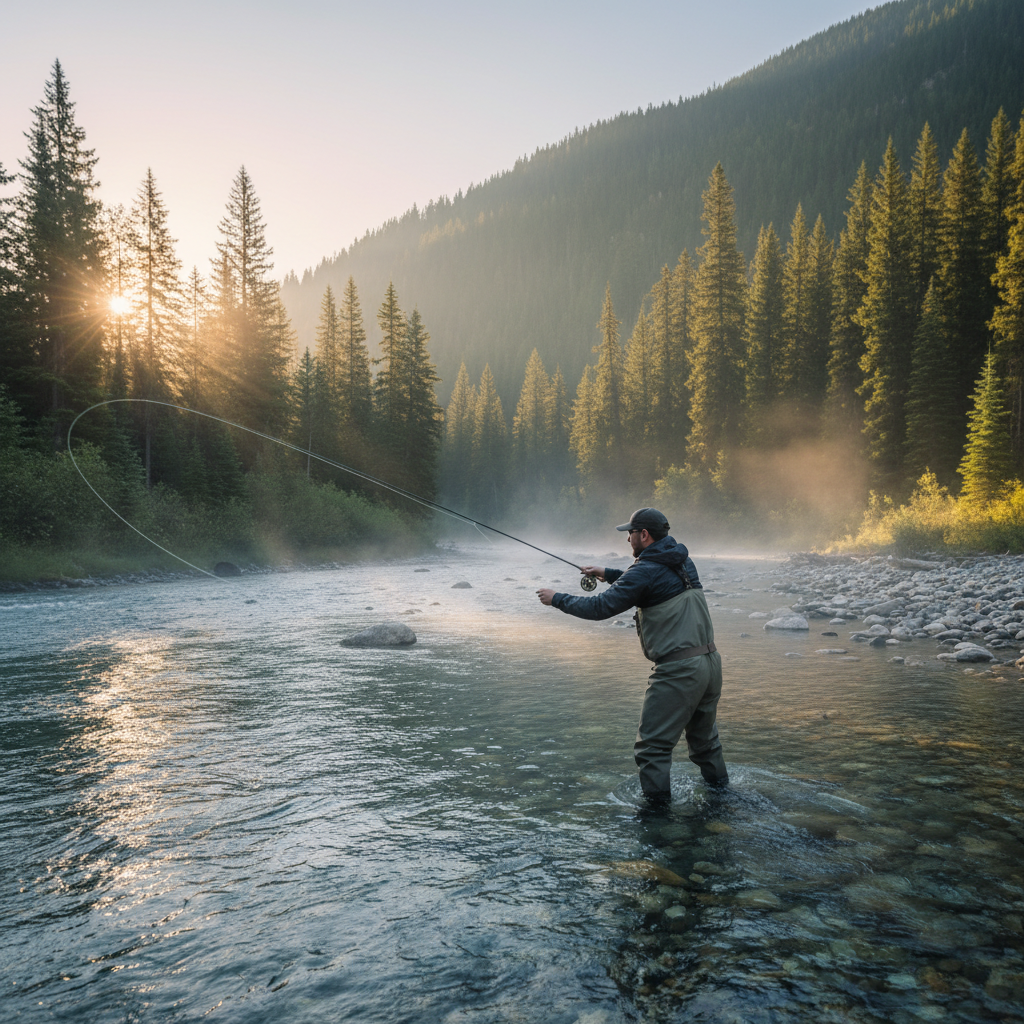
Fly fishing for trout is often seen as an art form, a serene dance between angler and nature. While it can appear intimidating to newcomers with its specialized gear and unique casting style, it's a deeply rewarding pursuit that connects you intimately with the aquatic world. This guide will cut through the jargon and provide a straightforward path for beginners eager to make their first cast.
Why Fly Fish for Trout?
Beyond the tranquility and beauty of the surroundings, fly fishing offers a distinct challenge and satisfaction:
- Observation: You learn to read the water, identify insect hatches, and understand trout behavior.
- Finesse: The delicate presentation of a fly often entices wary trout where other methods fail.
- Active Engagement: Fly fishing is a constant process of casting, mending line, and presenting your fly just right.
- Rewarding Challenge: Landing a beautiful trout on a carefully selected and presented fly is an unmatched feeling.
Essential Gear for the Aspiring Fly Angler
Don't get overwhelmed by the vast array of equipment. Start with these core items.
Rod, Reel, and Line
- Fly Rod: For trout, a 9-foot, 5-weight rod is the most versatile choice. It's forgiving for beginners, handles a variety of fly sizes, and can manage most trout species. Consider a beginner-friendly combo kit like the RiverBend Starter Fly Kit.
- Fly Reel: A simple, single-action reel with a smooth drag system is all you need. Its primary function is to store line and provide drag when fighting a fish.
- Fly Line: A Weight-Forward (WF) floating line matching your rod's weight (e.g., WF5F for a 5-weight rod) is ideal for beginners. It helps with casting distance and presentation.
- Leader and Tippet: The leader connects your fly line to your fly, tapering down in strength. The tippet is the thinnest section at the end, to which you tie your fly. For most trout, a 9-foot, 4X or 5X leader is a great starting point, with matching tippet material.
Waders and Boots
- Waders: Chest-high waders (neoprene for cold water, breathable for warmer) keep you dry and comfortable. Stockingfoot waders require wading boots.
- Wading Boots: Provide grip on slippery riverbeds and support for your ankles. Look for felt or rubber soles with good traction.
Accessories
- Landing Net: A rubber-coated net is gentler on fish, reducing harm.
- Nippers and Hemostats: Essential for cutting line and removing hooks.
- Vest or Pack: To carry your flies, leaders, tippet, and other small tools. A good option is the TroutMaster Vest.
Understanding Trout Flies: The Basics
Flies imitate the insects and small prey that trout eat. They fall into a few main categories:
- Dry Flies: Imitate adult insects floating on the surface. These are exciting to fish as you watch the trout rise to your fly.
- Nymphs: Imitate immature aquatic insects that live underwater. Nymphing is often the most effective method as trout feed primarily below the surface.
- Streamers: Imitate minnows, leeches, or larger prey. Great for targeting aggressive, larger trout.
Start with a small selection of versatile patterns: a few elk hair caddis (dry), pheasant tail nymphs, prince nymphs, and a couple of woolly buggers (streamer).
Basic Fly Casting: The Roll Cast and Overhead Cast
Don't let casting intimidate you. Practice is key!
The Roll Cast
Perfect for tight spaces or when you have obstructions behind you.
1. Let your line hang downstream or beside you.
2. Lift your rod slowly, drawing the line upstream until it forms a 'D' loop behind and above you.
3. Pause briefly, then push the rod forward smoothly but firmly, projecting the line straight out.
The Overhead Cast
The most fundamental cast for distance and accuracy.
1. Back Cast: Lift the rod smoothly, accelerating to an abrupt stop when the rod is just past vertical (around 1 o'clock). Let the line unroll behind you.
2. Pause: Wait for the line to fully extend behind you. This timing is crucial and often where beginners struggle.
3. Forward Cast: Smoothly bring the rod forward, accelerating to an abrupt stop when the rod is around 10 or 11 o'clock. Aim your cast.
Focus on smooth, controlled movements rather than brute force. Think of your arm as an extension of the rod.
Where and When to Find Trout
- Rivers and Streams: Look for features like riffles (shallow, fast water), runs (deeper, smoother flows), pools (deep, slow sections), and undercut banks or submerged logs where trout can hide.
- Lakes and Ponds: Trout will often cruise along shorelines, near inlets/outlets, or around submerged structure.
- Timing: Early mornings and late evenings are often the most productive, especially in warmer weather, when trout are actively feeding and insects are hatching. Overcast days can also be excellent.
Ethical Angling and Conservation
Always practice catch and release responsibly when appropriate, especially for wild trout.
- Minimize Handling: Keep fish in the water as much as possible.
- Wet Hands: Always wet your hands before touching a fish to protect its slime coat.
- Barbless Hooks: Crimp down barbs on your hooks for easier, less damaging release.
Fly fishing for trout is a journey of continuous learning. Embrace the challenge, enjoy the process, and soon you'll be experiencing the unparalleled joy of presenting a perfect fly to a hungry trout. Happy fishing!